AegisAI Perspectives · 042
Choose an AI email security platform by testing it on your own mail against seven criteria, from what the model reads to how an admin overrides a verdict.
To choose an AI email security platform, test it on your own mail against seven criteria, starting with what it finds in mail the built-in filter, on by default in Microsoft 365, already delivered1. AegisAI, for example, connects through the Microsoft 365 or Google Workspace API with an OAuth grant the admin controls and can revoke17. The criteria below are a test you run on your own mail.
Every AI email security platform sits on top of a filter you already have. In Microsoft 365, the built-in protection against email threats is on by default for every cloud mailbox. It also pulls delivered threats back out of mailboxes with zero-hour auto purge (ZAP)3.
So the trial measure is the threats the built-in layer delivered and did not pull back.
Question to ask a vendor: in our trial, which confirmed threats did you find in mail the built-in filter had already delivered, and how was each one confirmed?
A legacy secure email gateway sits in the mail path, while API-based AI email protection reads mail inside the mailbox platform after delivery. A gateway receives mail through an MX record change, so every message passes through it first. An API platform connects through an app the admin approves, so routing stays as it is.
The connection model decides what happens in an outage. When a gateway stops, inbound mail waits for it. When an API platform stops, mail keeps arriving while detection waits. The guide on replacing a secure email gateway without a cutover weekend covers running both side by side.
Question to ask a vendor: does deployment need an MX change, and what happens to inbound mail if your service is down?
A model can only judge what it reads, so ask for the full list of inputs. The hard cases carry no link or attachment at all. IC3 says chat generators can quickly create official-sounding emails that mimic a company's CEO, and businesses reported losses over $30 million to BEC scams involving AI in 202511. Total BEC losses reached $3,046,598,558 in 2025.
A text-only payment request has nothing to detonate. The model has to read the request itself and the sender's history. Authentication results add one more input. NIST SP 800-177 Rev. 1 names SPF, DKIM and DMARC as the mechanisms for authenticating a sending domain15. A message can pass all three and still impersonate a supplier, so those results are one input among several.
Question to ask a vendor: list every input your model reads for one message, and show how it handled a payment-change request with no link or attachment.
Autonomy is a setting, and you should know where it sits before the trial starts. Microsoft's automated investigation and response (AIR) queues remediation actions for SecOps personnel to approve4. For malicious similarity clusters of URLs or files, AIR approves its own pending actions. Approving or rejecting those actions needs a role group with the Search and Purge role.
Hold any AI platform to the same map. Write down which actions run on their own, which wait for a person, and which role approves them.
Question to ask a vendor: which actions run without approval, which wait for an analyst, and who can change that line?
A verdict without a reason cannot be checked, so require one for every message the platform moves or flags. The NIST AI Risk Management Framework lists explainable and interpretable among the characteristics of trustworthy AI13. NIST says explainability helps the people who operate or oversee an AI system understand its outputs. The explainer on how AI-powered email security works covers the models behind those verdicts.
Question to ask a vendor: for one blocked message and one allowed message from our trial, what reason did the model give, and which signals did it use?
The override path matters as much as the verdict. In Microsoft 365, admins use the Submissions page to report legitimate messages that were blocked and suspicious messages that were allowed12. An AI platform needs the same two directions. Release a good message, convict a bad one, and see the change recorded.
Question to ask a vendor: how does an admin reverse a verdict, how fast does the reversal reach every copy, and where is it logged?
Grant the least access the trial needs, and confirm the revoke path before you grant anything. Microsoft calls tenant-wide admin consent a sensitive operation, because it can give an app's publisher access to significant portions of your data, such as full access to all mailboxes7. In Google Workspace, Revoke access removes all access for an admin-installed Marketplace app, and access cannot be revoked for specific scopes8.
Keep the read grant and the removal grant apart where the platform allows it. Then the tool can be watched before it can delete anything.
Question to ask a vendor: which permissions does the app request, which of them can move or delete mail, and how do we revoke each one?
Compare approaches on the criteria above, never on a brochure. The table shows how each approach meets each criterion. Confirm every cell in your own trial.
| Criterion | API-based | Gateway | Built-in platform controls | Managed service |
|---|---|---|---|---|
| Mail routing | No MX change, connects through the platform API | MX record change, mail passes through it first | No change, part of the mailbox platform | Set by the tool the provider runs |
| When it acts | After delivery, by removing mail from mailboxes | Before delivery, in the mail path | During delivery, plus purge after delivery | Set by the tool the provider runs |
| What the model reads | Message content, sender history and authentication results through the API | What passes through the gateway | What the platform filters read | Depends on the tool; ask the provider |
| Actions without a person | Set by the vendor and the admin | Set by gateway policy | Set by the platform, with approval queues | Set by the provider's service terms |
| Reason per verdict | Ask to see one per message | Ask to see one per message | Ask what the portal shows per message | Provider reports; ask for one per message |
| Admin override | Release or convict in the vendor console | Release from gateway quarantine | Submissions and quarantine release | A request to the provider |
| How to revoke it | Revoke the app grant | Restore the earlier MX records | Change policy settings | End the provider's access and grants |
Score each platform yes or no on these questions, using evidence from your own trial.
Did the trial run on your own mail, in monitoring mode first?
Did it find confirmed threats the built-in filter had delivered?
Does deployment leave mail routing unchanged, or is the change planned and reversible?
Did the vendor list every input its model reads for one message?
Did it handle a payment-change request with no link or attachment?
Is it written down which actions run without approval?
Does every verdict come with a reason an analyst can check?
Can an admin reverse a verdict, with the change logged?
Is every permission listed before the admin grants it?
Does removal need a separate write grant?
Can an admin revoke every grant in Entra ID or Google Workspace?
Does inbound mail keep flowing if the platform goes down?
Illustrative example, figures are fictional. A fictional security team of three people scores two approaches after a trial on its own tenant. The API-based platform gets 11 yes answers out of 12; its one no is a missing separate write grant. The gateway gets 7 yes answers; its no answers include an MX change and mail that waits during an outage. The team keeps both scores, with the evidence for each answer, in the trial file.
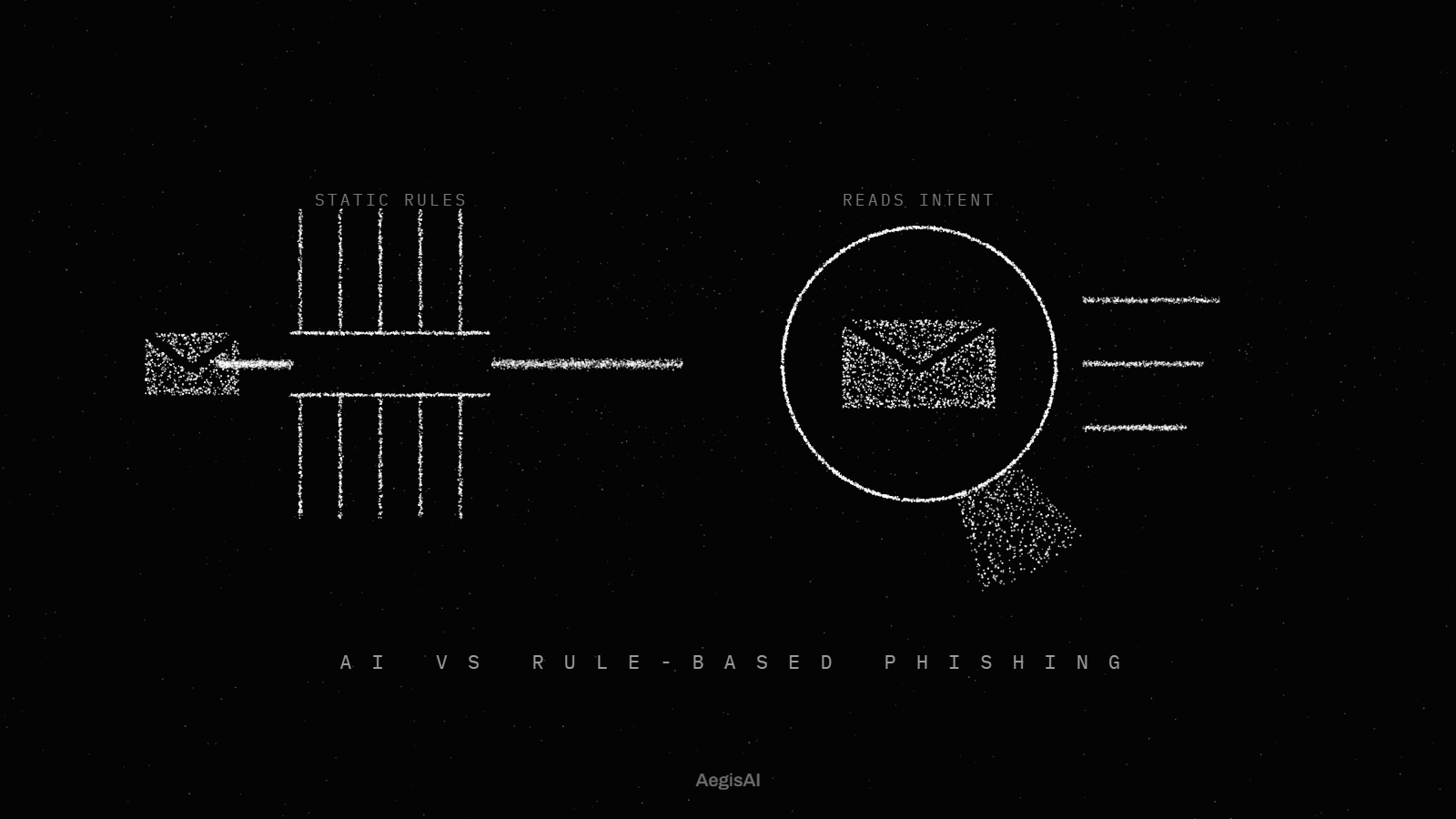
An email security platform is AI-native when a model reads each message and decides on it without a fixed rule written for that attack. Three tests make the label checkable. First, the model reads the request and the sender's history, not only links and files. Second, the vendor can say which actions the model takes on its own and which wait for approval, the same map Microsoft publishes for AIR. Third, each verdict carries a reason, which is what NIST asks of explainable AI.
Ask for the three answers in writing, and check each one in the trial.
Real innovation shows up as numbers on your own mail; marketing shows up as numbers without a denominator. Attackers already use AI: IC3 received more than 22,000 complaints reporting AI-related information in 202510. A product label does not show whether a platform catches those messages. Three numbers from your trial do.
The page on how to evaluate detection accuracy and the false negative rate sets out the arithmetic behind those denominators.
Run it in monitoring mode on your own tenant, so it records verdicts and moves nothing, then compare its findings with what the built-in filter delivered. Grant read access first and hold the write grant until the findings review, because tenant-wide consent is a sensitive operation. Run the trial long enough to see a payment-change request and a phishing campaign. Then check each finding by hand. The guide on how to structure a read-only email security proof of concept lays out the steps.
AegisAI reads mail through the Microsoft 365 or Google Workspace API after delivery, and nothing in the mail flow changes19. It runs one agent per inbox and four specialists per message, and gives one explainable verdict16. It follows every link, opens every file and decodes QR codes to the end, before anyone sees the email. Every verdict comes with its reason in plain language, so your team can check it and share it. In monitoring mode it records verdicts without acting.
Track three numbers from the first day of the trial.
The best AI email security solution is the one that passes the checklist above on your own mail. Run a monitoring-mode trial, count what the platform found after the built-in filter, and check the reason behind each verdict.
Microsoft 365 already includes built-in protection that is on by default. Measure what still reaches inboxes during a trial on your own mail, then decide.
No. An API-based platform connects through the Microsoft 365 or Google Workspace API with an admin grant, so mail routing stays as it is. A gateway is the approach that needs an MX record change.
Yes. In Google Workspace, Revoke access removes all access for an admin-installed Marketplace app, though not for specific scopes. In Microsoft Entra ID, review the permissions before granting tenant-wide consent.
No. Domain authentication (SPF, DKIM, DMARC) confirms the sending domain. An AI-written BEC email from a lookalike or compromised account carries no failed check, and BEC losses reached $3,046,598,558 in 2025.